
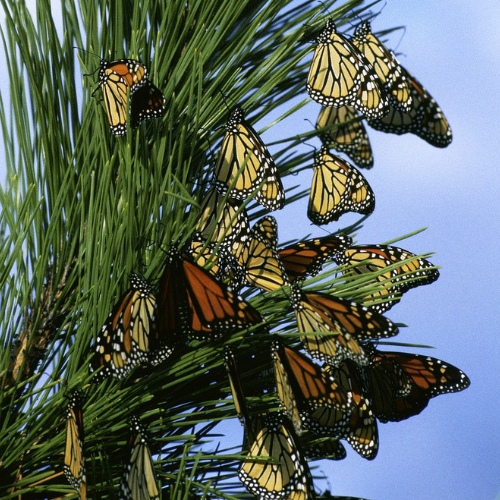
Although the monarch butterfly is not considered to be globally threatened, the North American migration is recognized by the IUCN to be an endangered biological phenomenon.
The flight of the butterflies is the longest known distance insect migration on Earth — and it's been occurring for thousands of years.
Monarch butterflies are known for the incredible mass migration that brings millions of them to California and Mexico each winter. North American monarchs are the only butterflies that make such a massive journey — up to 3,000 miles (4,828 kilometres). The insects must begin this journey each fall ahead of cold weather, which will kill them if they take too long.
Monarch butterflies begin life as eggs and hatch as larvae that eat their eggshells and, subsequently, the milkweed plants on which they were placed. Monarchs are dependent on milkweed plants, which larvae eat nearly exclusively.
Fattening larvae become colourful caterpillars, then create a hard protective case around themselves as they enter the pupa stage. They emerge as beautifully coloured, black-orange-and-white adults. The colourful pattern makes monarchs easy to identify. The distinctive pattern warns predators that the insects are foul tasting and poisonous.
Only monarchs born in late summer or early fall make the migration, and they make only one round trip. By the time next year's winter migration begins, several summer generations will have lived and died and it will be last year's migrators' great-grandchildren that make the trip. Yet somehow these new generations know the way, and follow the same routes their ancestors took — sometimes even returning to the same tree.
The Monarch Butterfly Conservation Status
The North American migration is recognized by the IUCN to be an endangered biological phenomenon, mainly due to the variety of threats the butterflies are facing at the winter sites.
These threats include: logging and clearance for agriculture in Mexico and coastal land development in California. In addition, outside the wintering sites monarch butterflies are further affected by the use of pesticides, habitat loss, the loss of milkweed populations, parasites, and climate change.
In order to protect migratory populations of the monarch butterfly at the wintering grounds in Mexico, the Monarch Butterfly Biosphere Reserve was established in 1986. This World Heritage property includes more than half of the overwintering colonies of the monarch butterfly's eastern population.
The Commission for Environmental Cooperation created, in 2008, The North American Monarch Conservation Plan, which details a strategy for conserving and maintaining the Monarch butterfly population through international cooperation between Canada, the United States and Mexico.
Their work will help to ensure that this spectacular butterfly is preserved and that its extraordinary migratory journey will be witnessed by future generations.
Further reading:
- Monarch Lab: www.monarchlab.org
- The Xerces Society — California Monarchs: www.xerces.org/california-monarchs
- WWF — Monarch Butterflies: www.worldwildlife.org
- Plant your own butterfly garden — read more at: www.flightofthebutterflies.com/get-involved/
Inspire a child to love and protect our natural world — explore our award-winning books at /books.