"I speak for the trees, for the trees have no tongues." — Dr. Seuss
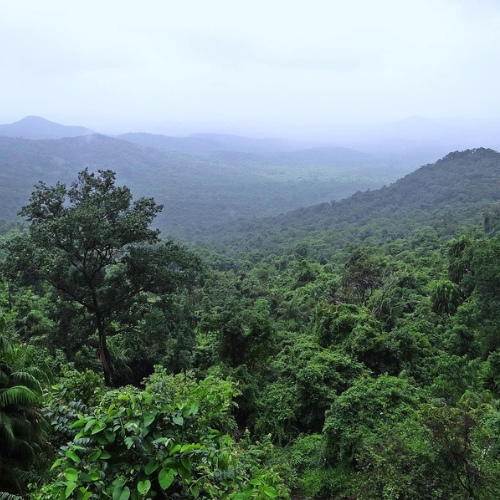
Forest areas cover about a third of our planet but they are reducing rapidly around the world.
Why are the forests disappearing? Forests are heavily exploited and deforestation continues at an alarming high rate, affecting also wildlife around the world.
The forests are destroyed for many reasons, among them:
- Agriculture — farmers destroy forests in order to create more space for planting and for grazing livestock.
- Logging operations — providing the world's wood and paper products, countless trees are cut each year, many times illegally.
Deforestation has many negative effects on the environment, including:
- Habitat loss for millions of species. Seventy percent of land animals and plants live in forests, and many of them cannot survive the deforestation that destroys their homes.
- Trees have a critical role in absorbing the greenhouse gases that fuel global warming. Fewer forests also means larger amounts of greenhouse gases entering the atmosphere, increasing global warming.
Is there a solution?
The most simple solution to deforestation would be to stop cutting down trees. But financial realities make this unlikely to occur. A more realistic solution is to manage forest resources by verifying that forest environments remain intact — balancing the cutting by planting enough trees to replace the older ones. Although the number of new tree plantations is growing each year, their total is still a tiny fraction of the Earth's forested land. There are still considerable efforts needed in order to create sustainable forest management in all countries and regions.
Join the effort — plant a tree today!
Explore more ways to take action at /take-action, or discover our award-winning books for young conservationists at /books.